The new programme of field meetings from April to October is now available. This year we are visiting sites across Somerset from the extreme north-west (Pill Saltmarsh near Avonmouth), the west (Minehead and Haddon Hill), the south (Yeovil Sutton Bingham Reservoir), the Mendips and the Levels. The habitats visited will include saltmarsh and coastal habitats, heathland, woodlands, wetlands, calcareous grasslands and urban areas.
Photography Competition 2025
The winning photos for 2025 are shown below. Click on a photo to get a full size image.
Copyright to all photographs belongs to the photographer. All were taken this year within the group’s recording area.
- Category 1 (rare plant register species)
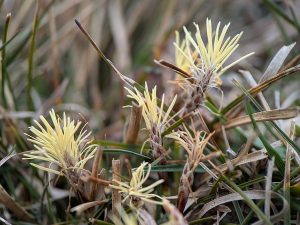
- 1st Fred Rumsey – Dwarf Sedge (Carex humilis)
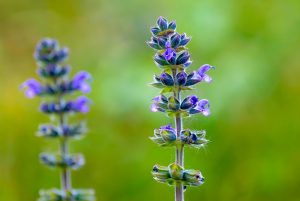
- 2nd Neil Burstow – Wild Clary (Salvia verbenaca)
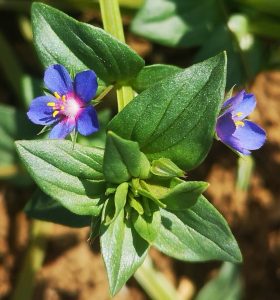
- =3rd Pat Steele – Blue Pimpernel (Lysimachia foemina)
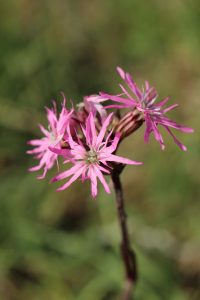
- =3rd Sarah Shuttleworth – Ragged Robin (Silene flos-cuculi).
- Category 2: (other species)
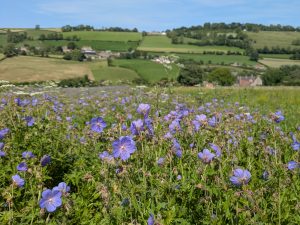
- 1st Helena Crouch – Meadow Cranesbill (Geranium pratense)
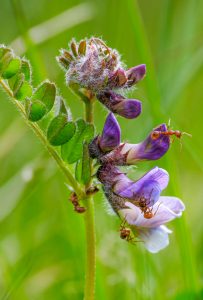
- =2nd Neil Burstow – Bush Vetch (Vicia sepium)
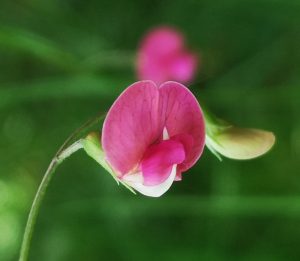
- =2nd Pat Steele – Grass Vetchling (Lathyrus nissolia)
- Category 3 (SRPG meetings)
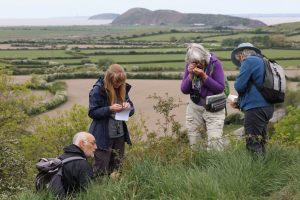
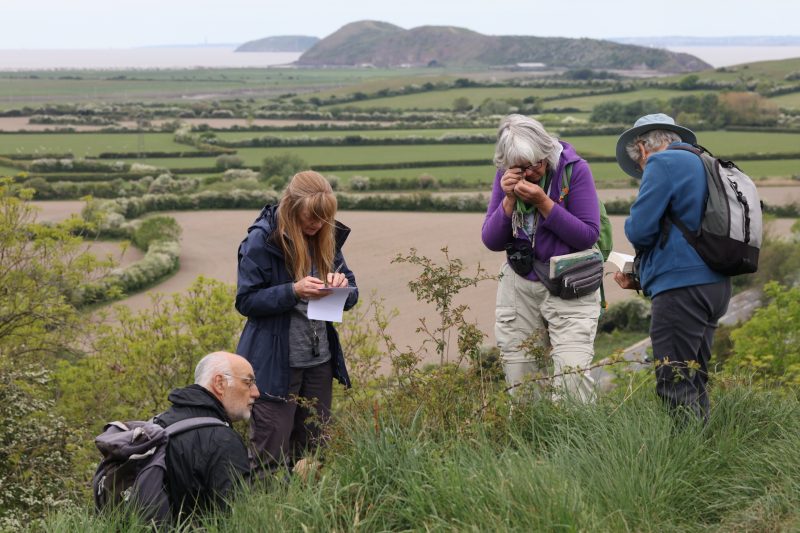
- 1st Fred Rumsey – Group inspecting Rosa micrantha (Small-flowered Sweet-briar) at Purn Hill
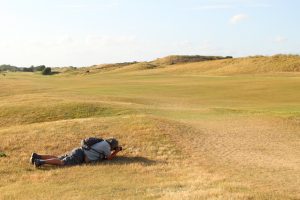
- 2nd Sarah Shuttleworth – Photographer at Berrow Golf Course
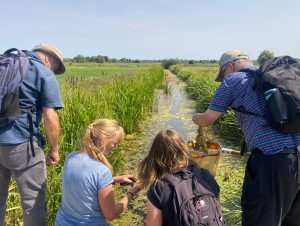
- 3rd Fred Rumsey – Ditch dabblers at West Moor
- Overall favourite
- Sarah Shuttleworth – Photographer at Berrow Golf Course.
Some reminders of our meetings this summer
Below are some of the lovely photos taken by members at meetings this summer. If you have photos of any meeting please let us have them for use in the reports, newsletter and on the website. You may also want to enter them in our annual photography competition. All photos supplied are shared on Google Drive – contact Val Graham for a link. If you do supply a photo please send full size files, not composites, without captions. Please ensure you include your initials and a brief description in the filenames. Store them in the appropriate meeting folder. Copyright remains with the photographer. You can also see all the meeting reports as soon as they are written here.
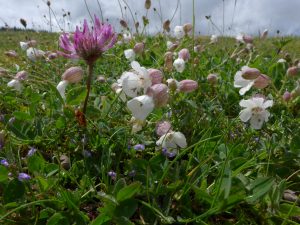
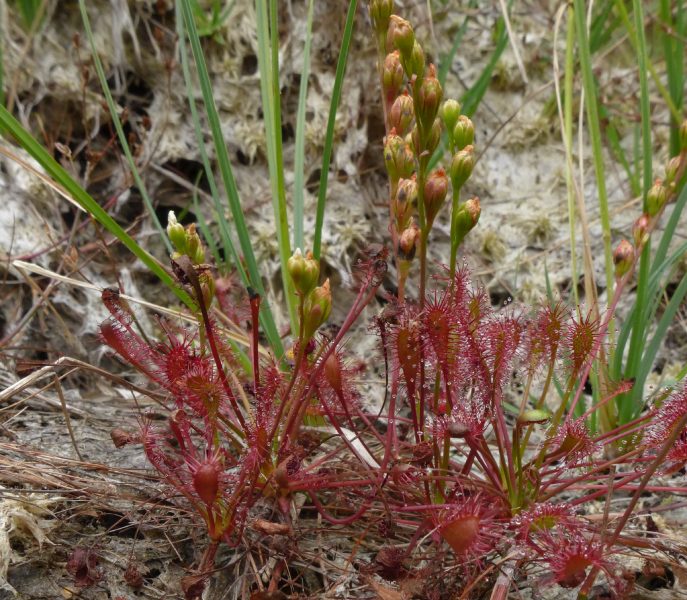
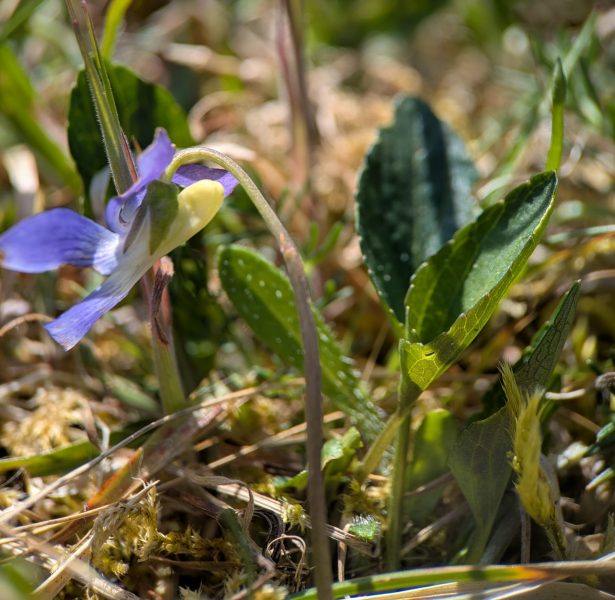
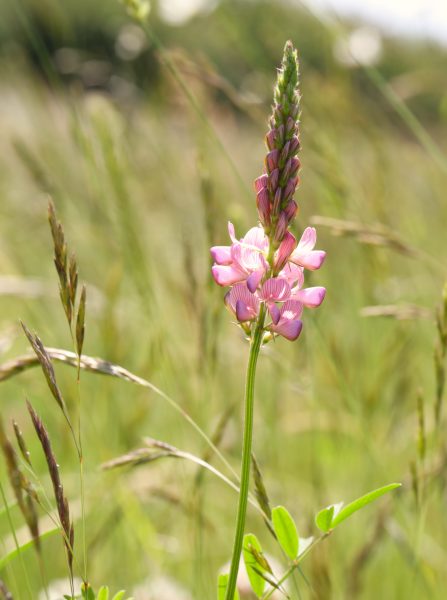
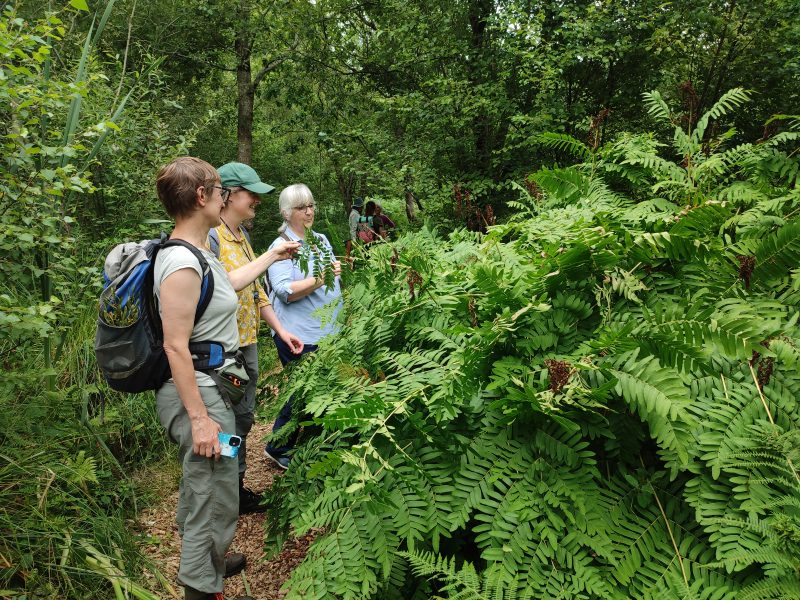
Clockwise from top: Members examine Small-flowered Sweet-briar (Rosa micrantha) , Purn Hill © Fred Rumsey; Sanfoin (Onobrychis viciifolia), Lilstock © Fred Rumsey; Royal Fern (Osmunda regalis) © Val Graham, Shapwick Heath; Heath Dog-violet (Viola canina), Berrow Dunes © Helena Crouch; Oblong-leaved Sundew (Drosera intermedia) © Helena Crouch. The links are to the BSBI plant atlas which shows the plant distribution and has a useful brief description of the plant, its habitats, and its population trend.
2025 meetings programme now available
The programme for our 2025 field trips is now available. We have eight meetings in the south and west of the county (VC5) and eight in the north (VC6). In addition to the usual searches for rare plants and more general recording, they include a day on grass ID and a visit to the Taunton Herbarium. Thanks are due to all those who have volunteered to lead these outings. If anyone has a special place they would like to visit in future years please get in touch with the committee. Below are some photos from our 2024 outings. All photos © Val Graham.


2024 Newsletter
The 2024 SRPG Newsletter is now available thanks to the hard work of our editor Karen Andrews and all the contributors to meeting reports and other articles. Reports on each of our 19 field and indoor meetings in 2024 are included covering fascinating visits to sites right across Somerset from the Ashton Court Estate on the edge of Bristol, to Blackmore Farm near the Dorset border and from Robber’s Bridge on Exmoor to King’s Castle Warren on the eastern border. There are also five short articles on botanical subjects and a tribute to the late Rob Randall. Finally, there is the list of new and interesting plants records made during the year.


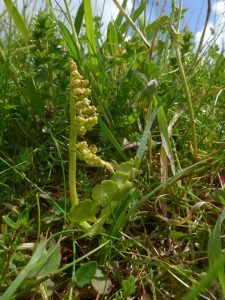
Some of the many lovely photographs from our meetings in 2024. Clockwise from top left: Wood Horsetail (Equisetum sylvaticum) at Britty Common, Moonwort (Botrychium lunaria) from Brean Down, Green-winged Orchid (Anacamptis morio) from Babcary Meadows, and members at Pitney © Val Graham, Nicky Hodges, Fred Rumsey, and Helena Crouch respectively.

Where we went in 2024
Leaf Shapes and Climate


from Flickr CC BY 2.0

from Flickr CC BY 2.0
I’ve occasionally peered at a lovely piece of species-rich grassland and wondered a) how all the different species co-exist and b) what benefit the many different leaf shapes convey. Answers on a postcard please. However, I came across some information on one tiny facet of this issue while browsing information about the methods used to infer climatic conditions in the ancient past.
Early in the 20th century two Harvard researchers – Irving W. Bailey and Edmund W. Sinnott – wanted to establish whether there were patterns in the distribution of leaf shapes across the world’s climatic zones. Through this they hoped to use fossil remains of leaves as a guide to the prevailing climate at the time of their preservation. Their work showed that there is a correlation between cooler climates and toothed leaves in woody dicots. This has now developed into a mature and well-tested method called Leaf Margin Analysis as one of many methods for determining past climatic conditions – which has immense practical relevance in the current climate crisis.
Fuller explanations can be found here and here. These two papers explore some of the reasons for this trend and consider some of the confounding factors. There appears to be a strong link between deciduous trees and toothed margins, perhaps linked to the need to establish photosynthesis in the early spring, but a weaker correlation for other types of plant.
Winter meetings programme
Our programme of winter meetings is now available including our traditional contribution to the BSBI New Year Plant Hunt, our AGM and social day, a day focussing on recording and a repeat of our very popular Vegetative Identification Workshop with John Poland.
Mendip Hills National Landscape video series
Ecologist, TV presenter, author, and more importantly, SRPG member, Mike Dilger has produced and presented a series of professional videos for the Mendip Hills National Landscape team. This is the new name for the former AONB. These films explain the team’s approach to nature recovery and highlight eight “champion species” around which they will be promoting their broader goal of conserving and improving biodiversity across the area. These include, of course, a short film about the Cheddar Pink, Somerset’s county flower, where Mike is talking to our co-chair Helena Crouch. Quite a few other Mendip plants get some publicity and SRPG gets a few mentions as well.

This year’s meetings programme
This year we have 19 exciting field meetings between April 6th and November 17th. Everyone is welcome but please remember to let the leader that you are coming. Below are some pictures from past meetings.
Read all about it – the 2023 newsletter is here
Now available just over here, our full-colour heavily illustrated record of our doings in 2023. Many thanks are due to all the contributors and especially to Karen Andrews for wrestling the content into this impressive publication. It includes reports on all our indoor and outdoor meetings including our very successful 25th anniversary conference and a number of articles on the following diverse subjects.
Nigel Chaffey provides some in-depth analysis of the form and function of the grass ligule. I always thought it was just nature being kind to botanists, but no, it appears to have two distinct functions! Fred Rumsey has given us a summary of the newly-recognised complications of our smallest flowering plants in the genus Wolffia (Watermeals or Rootless Duckweeds). Ian Salmon has been investigating H.D. Jordan, whose specimens have been added to the Somerset County Herbarium and Helena Crouch reports on a botanical survey of Somerset’s largest island, Steep Holm (largest of two I think but I’m happy to be corrected). As ever there is a summary of interesting plant records for 2023 from Helena and also an update from the dandelion recorders Simon Leach and Jeanne Webb. Happy reading!
Below – a small taster of some of the images in the articles – Henbane on Steep Holm (© Helena Crouch), , a section through the ligule of Millium effusum (© Nigel Chaffey), Taraxacum falcatum (© Simon Leach) and Wolffia columbiana (© Helena Crouch).