The Guardian published an article on Calaminarian Grassland this week focusing on Northumberland. This special habitat is the result of heavy metal contamination from historic mining of lead, zinc and other heavy metals. Only a limited range of plants can survive although other species slowly gain a foothold as the metals are leached out. While the North Pennines, Peak District, mid-Wales, and Devon and Cornwall hold the main Calaminarian Grassland sites, there are small patches on Mendip particularly at the Blackmoor Reserve, Priddy Mineries, Shipham, and Sandford Hill. More details are in this report from 2017 which includes a summary of the situation on Mendip. In Somerset, these areas are strongholds of Sabulina verna Spring Sandwort, Noccaea caerulescens Alpine Pennycress and Silene uniflora Sea Campion. Other rare plants that are tolerant of these conditions include Botrychium lunaria Moonwort, Gymnocarpium robertianum Limestone Fern, and Ditrichum plumbicola Lead-moss.
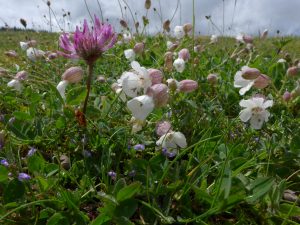
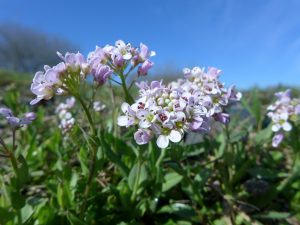
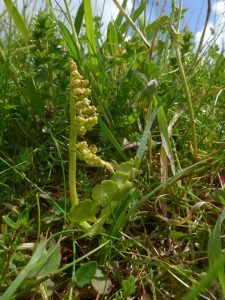
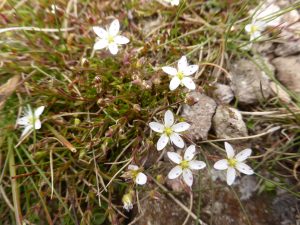
Clockwise from top left: Silene uniflora Sea Campion (Priddy Mineries), Noccaea caerulescens Alpine Pennycress (Blackmoor Reserve), Sabulina verna Spring Sandwort (Blackmoor Reserve),and Botrychium lunaria Moonwort (Priddy Mineries). All photographs © Helena Crouch.